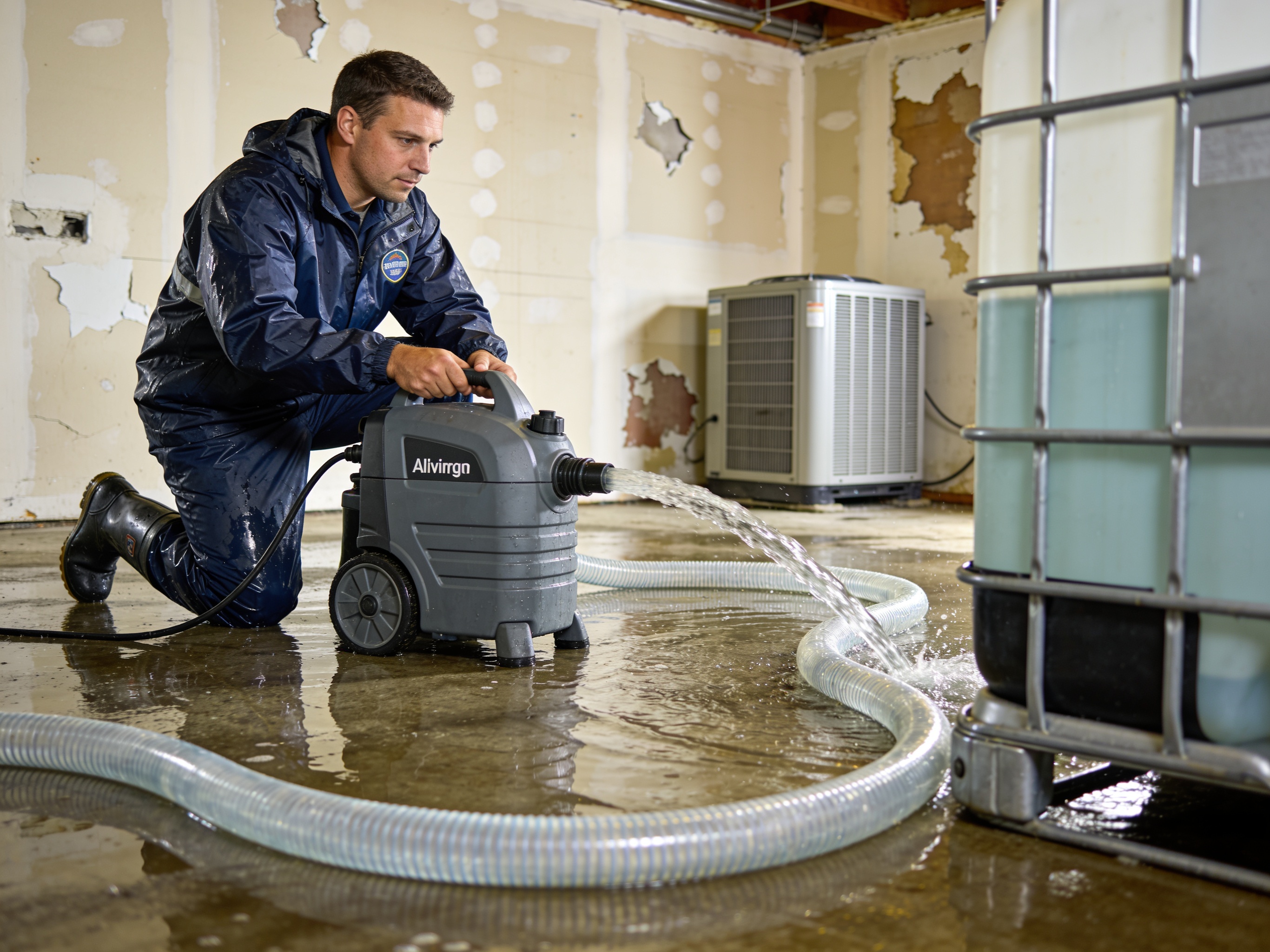
In Arlington's humid subtropical climate, standing water from summer thunderstorms or burst pipes spreads quickly through the slab foundations common in North Arlington and South Arlington homes built before 1990. Older stock near the University of Texas at Arlington often has limited crawl space access, forcing crews to cut strategic access points rather than rely on standard perimeter drying. Tarrant County soil swells during heavy rains, pushing moisture back into walls even after initial pumping, which is why extraction must continue until moisture readings drop below 12 percent on both sides of drywall.
Downtown Arlington properties near Globe Life Field and AT&T Stadium sit on flatter terrain that channels runoff from Six Flags Over Texas parking lots during intense downpours. This creates hidden pockets of water under commercial subfloors that standard shop vacs miss. Crews use truck-mounted extraction units with 500-plus CFM ratings to pull water from carpet pads and hardwood before it migrates to neighboring units in multi-family buildings common in East Arlington.
Mild winters still bring occasional freeze-thaw cycles that crack supply lines in Grand Prairie and Mansfield homes, sending water under kitchen cabinets where particleboard bases absorb it fast. Emergency removal here includes lifting vinyl plank to inspect subfloor seams, because trapped moisture leads to cupping within 48 hours in the local humidity. Technicians document every extraction point with photos for insurance adjusters who routinely question claims from properties within two miles of major stadium event traffic.
Water that reaches electrical outlets in South Arlington ranch homes requires immediate circuit isolation before extraction begins. Crews carry non-conductive wands and GFCI-protected equipment because older wiring in these neighborhoods lacks modern grounding. Delaying removal even one day allows mold to start on drywall paper facing once temperatures climb back above 75 degrees, which happens most weeks from March through October.
Technician insight
In Arlington the thing that catches most people out with Emergency Water Removal is how fast Tarrant County clay soil pushes moisture back into slab edges after a summer storm. Homes near UTA and in older North Arlington blocks often have no perimeter drain, so water that looks gone at 2pm is back under the baseboards by morning if you skip the second extraction pass.
Storm Runoff Under Slab in East Arlington
Heavy rain sent runoff under a 1978 slab home two blocks from AT&T Stadium. Initial pumping left moisture trapped against the exterior wall. Crews cut two access points, extracted the remaining water with inline wands, and documented readings for the adjuster. The floor dried without mold because extraction continued until readings held below 12 percent.
Emergency Water Removal Services We Offer
✓Rapid Water Extraction
Truck-mounted pumps remove standing water from slabs and crawl spaces in Downtown Arlington and East Arlington homes within hours of the call.
✓Carpet and Pad Removal
Saturated carpet and padding are cut and hauled from North Arlington and South Arlington residences to prevent hidden mold growth under baseboards.
✓Sewage Contaminated Water Removal
Category 3 water from backups near UTA campus is extracted with full PPE protocols and disposed according to Tarrant County health rules.
✓Storm Runoff Extraction
Floodwater from heavy rains around AT&T Stadium and Globe Life Field is pumped out before it seeps into finished basements common in nearby Grand Prairie.
✓Hardwood Floor Water Removal
Moisture is pulled from under tongue-and-groove floors in Mansfield and Arlington homes using specialized wands to limit cupping during humid summers.
Emergency Water Removal Cost in Arlington, TX
| Service | Typical Range | What Affects It |
|---|---|---|
| Initial extraction visit | $450–$900 | Depends on number of rooms and water depth in slab homes. |
| Carpet and pad removal | $1.25–$2.50 per sq ft | Higher in older South Arlington homes with glued-down padding. |
| Sewage water extraction | $800–$1,600 | Includes PPE and disposal fees required in Tarrant County. |
| Hardwood moisture pull | $600–$1,200 | Moves with floor age and access under baseboards. |
Ranges are typical for Arlington, TX and confirmed with an exact written quote before any work starts.
How it works
- 1
On-Site Assessment
Technician measures water depth, identifies affected materials, and maps migration paths through slab homes typical in Arlington neighborhoods.
- 2
Containment Setup
Plastic barriers and negative air are placed to stop cross-contamination before extraction equipment enters the structure.
- 3
Water Extraction
Truck-mounted and portable units remove bulk water from floors, carpets, and wall cavities until readings stabilize.
- 4
Documentation And Handover
Photos, moisture logs, and drying plan are provided for insurance and homeowner review before equipment is staged for the drying phase.
Pricing
Pricing varies by water volume, affected square footage, and whether sewage or structural materials are involved.