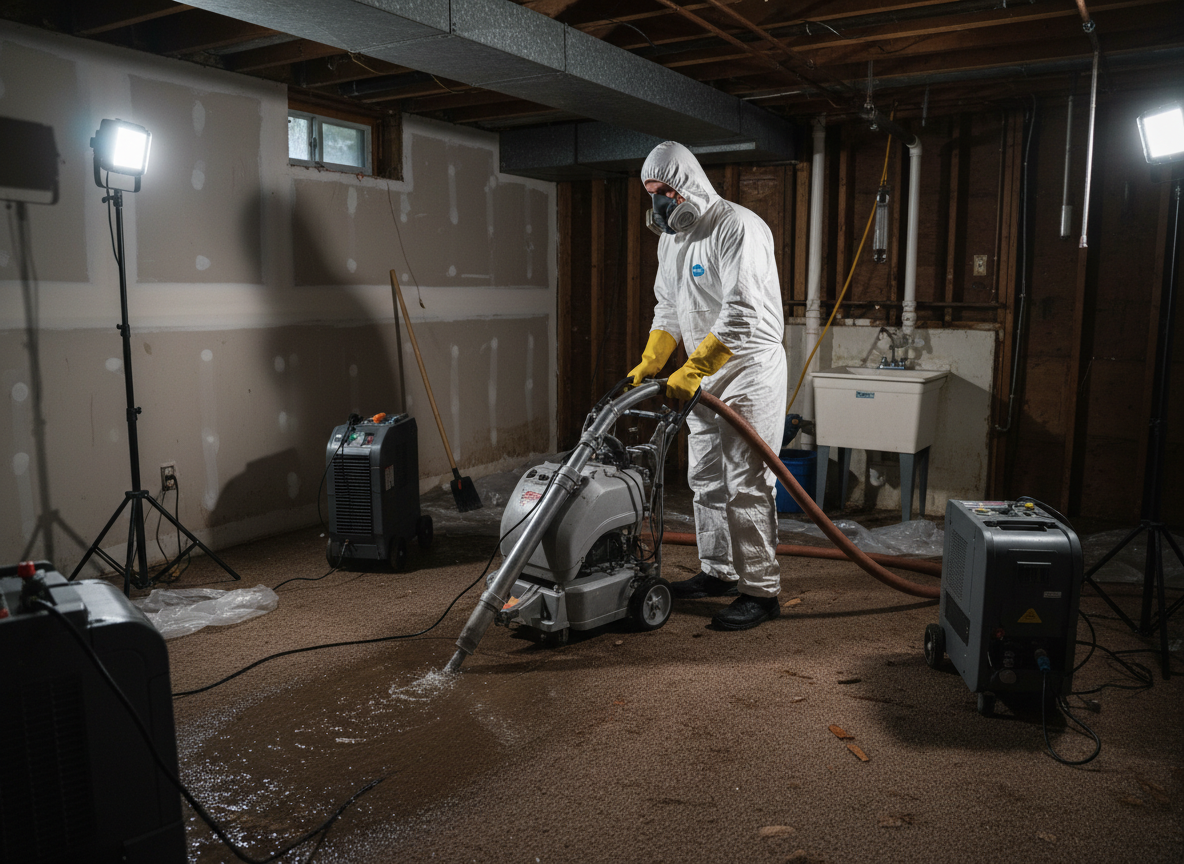
Arlington's humid subtropical climate brings heavy summer storms that quickly overwhelm older homes in South Arlington and East Arlington, where clay-heavy Tarrant County soils slow drainage and push water into foundations. In these neighborhoods many homes built before 1980 have crawl spaces and slab-on-grade construction that trap moisture against plumbing lines, turning a small leak into widespread subfloor damage within hours. Technicians must extract standing water fast, then run industrial dehumidifiers calibrated for 70-plus percent outdoor humidity to prevent mold on particleboard cabinets and hardwood floors common in the area.
Near the University of Texas at Arlington and Globe Life Field, newer multifamily buildings often share walls and roof drains that route storm water across multiple units, so a single roof leak can affect several households at once. Emergency crews map moisture with thermal imaging because vinyl plank flooring popular in these complexes hides wet underlayment that standard fans miss. Working around AT&T Stadium event traffic also means staging equipment early so pumps and air movers can run uninterrupted once water removal begins.
In North Arlington and pockets near Six Flags Over Texas, mature trees drop roots that crack older cast-iron sewer lines during mild winters when the ground shifts. A backup here spreads contaminated water into finished basements faster than in drier climates, requiring full containment and HEPA air scrubbing before drying starts. Crews document every step for insurance adjusters because Tarrant County properties frequently sit in 100-year flood zones that affect claim approval.
Technician insight
In Arlington the thing that catches most people out with Emergency Water Damage Restoration is how quickly our clay soils and high summer humidity push moisture into subfloors of 1970s slab homes in East Arlington; if you only pull the carpet without running dehumidifiers for at least four days the particleboard underlayment swells and you end up replacing the whole floor.
South Arlington Slab Leak After Heavy Rain
Water from a cracked supply line under a 1978 home in South Arlington migrated across the slab during a summer storm. Crews extracted standing water, mapped hidden moisture behind baseboards, and ran drying equipment for five days until readings dropped below 12 percent. The homeowner avoided mold growth and kept the original oak flooring.
Emergency Water Damage Restoration Services We Offer
✓Burst Pipe Water Extraction
Immediate removal of standing water from supply-line failures common in pre-1990 Arlington homes, followed by targeted drying to protect nearby drywall and flooring.
✓Storm Flood Cleanup
Rapid extraction and moisture mapping after heavy rains that pool against clay soils in South Arlington and East Arlington neighborhoods.
✓Sewage Backup Remediation
Containment, removal, and sanitizing of contaminated water from tree-root damaged lines that affect older properties near the University of Texas at Arlington.
✓Carpet and Flooring Drying
Lift and dry saturated carpet, pad, and hardwood in homes around AT&T Stadium where slab leaks spread under floating floors.
✓Ceiling and Attic Leak Restoration
Locate and dry water trapped above ceilings in multifamily buildings near Globe Life Field before mold forms in humid summer air.
Emergency Water Damage Restoration Cost in Arlington, TX
| Service | Typical Range | What Affects It |
|---|---|---|
| Initial Assessment | Free | During Mon–Fri 8am–6pm or Sat 9am–2pm |
| Water Extraction | $250–$650 | Varies by gallons removed and access in crawl spaces common in South Arlington |
| Drying Equipment Rental | $400–$900 | Per 3–5 day cycle; longer in summer humidity |
| Sewage Containment And Sanitizing | $600–$1,200 | Higher when backup reaches finished basements near older North Arlington lines |
Ranges are typical for Arlington, TX and confirmed with an exact written quote before any work starts.
How it works
- 1
Safety And Water Source Shutoff
Technicians arrive, secure electrical hazards, and stop the active leak source before any extraction begins.
- 2
Standing Water Removal
Pumps and extraction tools pull visible water from floors, carpets, and cavities while documenting moisture levels.
- 3
Drying And Dehumidification
Air movers and commercial dehumidifiers run until readings confirm the structure is dry, typically 3-5 days in Arlington humidity.
- 4
Final Inspection And Handover
Moisture meters verify all affected materials; a written report is prepared for insurance and the homeowner.
Pricing
Most jobs start with a free assessment during business hours; total cost depends on water volume, affected square footage, and how quickly drying can finish in local humidity.